
How to treat tendonitis?
Tendon inflammation, medically known as tendinitis or tendinopathy, most commonly develops as a result of repeated mechanical overuse. It can occur in any type of sport, but also during repetitive manual work or office-based tasks. It usually manifests as pain and tenderness around a joint, sometimes accompanied by swelling or limited mobility. Although tendon inflammation can affect any tendon, the hands and arms are most often involved (shoulders, elbows, wrists), while the knees and heels are also frequently affected. We will advise you on how to deal with tendon inflammation effectively.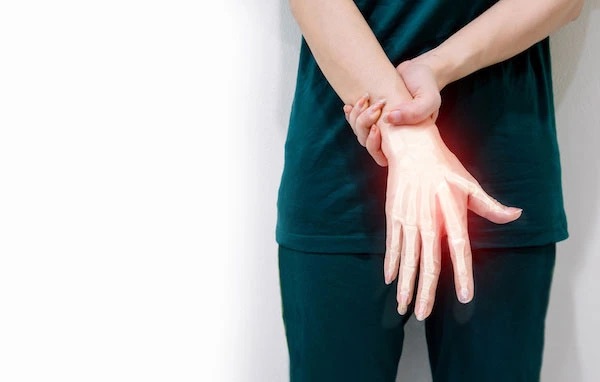
- What are the symptoms of tendon inflammation?
- Who can develop tendon inflammation?
- Where does tendon inflammation occur most often?
- How to treat tendon inflammation?
- Home remedies for tendon inflammation
- How does CBD affect tendon inflammation?
- Which ointment to use for tendon inflammation?
Article summary:
- Tendon inflammation most often develops due to overuse or repetitive strain and is typically accompanied by pain, swelling and restricted movement.
- Treatment usually involves rest, icing, reducing strain and using anti-inflammatory products, with CBD products potentially supporting regeneration.
- If the pain does not improve, becomes worse or persists for a longer period, it is advisable to consult a doctor or physiotherapist.
What are the symptoms of tendon inflammation?
The main symptom is pain in the area of the affected tendon, especially during movement and physical strain – it usually eases at rest. The pain may be dull and chronic, or it may appear suddenly as a sharp reaction to overuse. Other symptoms include swelling, local warmth, tenderness to the touch and redness.
There are several types of tendon problems:
- Tendinitis: an acute inflammatory form with swelling and pain, typically occurring after sudden overloading.
- Tendinosis: a chronic degenerative change in the tendon without significant inflammation, caused by long-term repetitive strain.
- Trigger finger: narrowing of the tendon sheath causes a catching, snapping or jerky movement of the finger. It most commonly affects the thumbs.
- Tennis elbow (lateral epicondylitis): overuse of the forearm extensor muscles during repeated wrist movements. It is not caused only by tennis – common triggers also include computer work or manual labour.
What is Achilles tendon inflammation?
Inflammation of the Achilles tendon is caused by long-term overloading. This problem typically affects athletes who engage in intense physical activity, such as running, football, tennis or basketball.
However, it is also common among people returning to sport after a longer break, recreational athletes who exercise irregularly and older adults whose tendons tend to weaken significantly with age.
Who can develop tendon inflammation?
Anyone can suffer from tendon inflammation. However, it is more common in people who perform repetitive movements or are exposed to long-term one-sided strain. Risky activities include:
- Gardening
- Woodworking
- Manual work
- Tennis, golf, skiing, baseball (throwing and pitching)
Other risk factors for tendon inflammation include:
- Poor posture or unsuitable workplace ergonomics
- A sudden increase in training intensity without sufficient adaptation
- Associated health conditions such as rheumatoid arthritis, gout/pseudogout or kidney disease
Adults aged 40 and over are more susceptible.
Where does tendon inflammation occur most often?
Tendon inflammation can appear almost anywhere in the body where a tendon connects muscle to bone.
The most common areas include:
- Thumb and wrist
- Elbow (tennis elbow or golfer’s elbow)
- Shoulder (rotator cuff)
- Hip joint
- Knee (patellar tendon)
- Achilles tendon
How to treat tendon inflammation?
The foundation of treatment is removing the cause of overuse and allowing enough rest. In the acute phase, icing the area (15–20 minutes several times a day) helps reduce swelling and pain.
Anti-inflammatory medicines, such as ibuprofen, can also be used and are available over the counter – however, they are not suitable for long-term use without consulting a doctor. As a complementary option, try hemp ointment or anti-inflammatory CBD.
If the condition does not improve within approximately three weeks of starting self-care, visit your doctor.
Your doctor may recommend or prescribe:
- Physiotherapy: a key pillar of treatment. A physiotherapist will create an individual rehabilitation plan, including eccentric strengthening exercises, which are a scientifically supported standard for chronic tendinopathies, especially of the Achilles tendon and patellar tendon.
- Corticosteroid injections: corticosteroids act quickly to reduce inflammation and pain, but they are more suitable for short-term relief.
- Shockwave therapy (ESWT): a non-invasive method with good results in chronic tendinopathies.
- Surgery: an operation is only rarely needed, usually in serious cases that do not respond to other forms of treatment.
Home remedies for tendon inflammation
Traditional home methods can serve as a complement to conventional treatment. In general, it is recommended to consume more protein, magnesium, potassium and calcium – tendons are made mainly of collagen, and its formation depends on adequate nutrient intake. Cottage cheese wraps or herbal compresses with arnica or comfrey are also popular. A bath with pine needles or increased consumption of Chinese wolfberry (goji) may also help.
How does CBD affect tendon inflammation?
Research into the effects of CBD on the musculoskeletal system is showing promising results. Available studies suggest that CBD has anti-inflammatory and immunomodulatory properties, which may be beneficial in inflammatory and rheumatic conditions affecting connective tissues, including tendons and ligaments.
CBD works through the endocannabinoid system, which plays a role in regulating pain and inflammation. Another study examining the effects of CBD on inflammation confirmed its potential as a supportive aid – however, CBD is not a substitute for medical care and research is still ongoing.
From our products, we recommend taking either CBD drops internally, or alternatively CBD coconut oil, which can also be applied directly to the inflamed area.
Which ointment to use for inflammation?
If you are looking for an effective topical product for tendon inflammation, we recommend trying hemp ointment with chilli for muscles and joints.
We have also had excellent experience with the combination of CBD warming and cooling gel – use the warming gel for chronic issues to promote blood circulation, and the cooling gel in the acute phase to help reduce swelling.
Thanks to the active formula and CBD content, you may feel relief from the very first application.
Author of the article: Lucie Garabas